Showing posts with label joie de lire. Show all posts

Thursday, November 11, 2010

Childhood Challenge: RAMONA QUIMBY, AGE 8

I can't believe this is already my 11th post for my Childhood Challenge; that means I only have one more book to read to complete my year-long challenge. This year has gone by fast! This month I re-read Ramona Quimby, Age 8 by Beverly Cleary.


From My Memory
The Ramona books were a staple in our household when I was growing up. My sister collected all of them, and I borrowed them from her. I remember thinking I was a lot like Ramona--Ramona had an older sister (Beezus), and even though they fought, I think Ramona thought her sister was pretty cool and wanted to be like her but came up short. Growing up, I often felt eclipsed by my cooler older sister and thought that I was just her dorky younger sister. It felt good to have a literary character to bond with. My favorite of the series was Ramona Quimby, Age 8, which I first read in the third grade—the same age as Ramona in the book. I read it on a day that I was sick and stuck at home (as a kid I much preferred going to school than staying at home), and I loved the book so much that I read the entire thing that day. Though I’m not sure how long it has been since I’ve last read this book, I know it’s been a while (as in more than 15 years). Two plot lines stick out in my memory of this book: Ramona and Beezus have to eat cow tongue, and they also cook their parents dinner, which in some ways turns out to be a disaster. Since Ramona Quimby, Age 8 was one the books that inspired my childhood joie de lire, I am especially excited to re-read this book.


After Re-Reading
After finishing the book, my first thought was “Beverly Cleary is amazing.” My second thought was “Man, I wish I could write like her.” She writes all the Ramona books in the third person but through Ramona’s perspective. It is oftentimes necessary and always brave, I think, for an author to tell a story meant for young readers through the eyes of a child so that the readers are able to better connect with the character and get more out of the story. I added the “brave” label because I think it is difficult for adults to capture children—their thoughts, dialogues, actions—and to make them believable characters to adults and young readers alike. Beverly Cleary does just that—she captures the characters. She doesn’t rely on outlandish plots to carry her books; in fact, the Ramona books are based on everyday occurrences. They’re not mysteries, they’re not exploring the wild unknown, they don’t have paranormal or magical themes… They’re real. They’re about life.

In this book, Ramona’s father is going back to college, which puts a bit of a financial strain on the family. Ramona knows it is important for her to be good to support her family while her mom and dad are stressed about paying the bills (and while her dad is stressed about having his own homework again), so a lot of the book centers around her struggle to be a good daughter and listen to her parents and her teacher and not fight too much with her sister or Willa Jean, the young girl whose grandmother babysits Ramona after school.


Ramona is at once an exasperating and enchanting character. The first day at school she meets a boy she terms “Yard Ape” and who picks on her by stealing her eraser and then calling her “Bigfoot.” Ramona shoots right back, “That’s Superfoot to you.” She’s sassy, full of life, and endearing. Her thought process reminds me of my own (both as a kid and an adult)—it is slightly random but completely connected in Ramona’s mind. For example, she is assigned a book report in which she has to sell a book about a cat and its journey in finding a home; she decides to perform a live commercial of sorts to sell the story. But as she is standing in front of her classroom reciting her lines for her commercial, she forgets what her ending line is. She goes to the only line she can remember from a real commercial and blurts out, “I can’t believe I ate the whole thing!” On the outside, it’s random; being privy to her thought processes, though, it makes sense.

The story is about a family going through changes, a young girl getting used to a new school, and a girl (and her older sister) trying to figure out this growing-up business. It isn’t fancy—it’s real. And lovable. After being enchanted all over again by Ramona Quimby, I am itching to go out and buy the whole series so I can regularly re-read them all.

I highly recommend the Ramona books for readers of all ages. Even if you never read them as a kid, I suggest you read one as an adult and cherish the memories of what it was like to be a child.

Monday, November 8, 2010

NaNoReaMo 2010: Week 1 Recap

I finished four books during the first week of my month of reading; three of those books I read in the first three days (the fourth took longer because we had company and a wedding in the family over the weekend). I've noticed a couple things about using all my free time for reading: (1) Reading for fun makes me more productive when I work; and (2) I have been more relaxed during the last week than I have been in a long time because I'm spending more time doing what I love. So far, I'd say that NaNoReaMo is teaching me that I need to read like a fiend more often because feeding my joie de lire also feeds my joie de vivre.

The first book I read was The Shunning by Beverly Lewis, which is the first book in The Heritage of Lancaster County series. The book is about a woman who had been raised Amish, only to find out much right before her wedding day that her family had been keeping a secret from her for 22 years. I liked the book because the Amish lifestyle fascinates me, but I didn't like it enough to go out and get any of the other books in the series. While a lot of plot lines can be termed predictable, I've found there's a good predictable and a bad predictable. For me, a good predictable is one in which you can figure out the general direction of the plot from the beginning but are so in love with the characters and/or setting that you feel propelled to keep reading and, in fact, end up feeling like the plot is new even though you guessed from the beginning what might happen. On the other hand, a bad predictable is one in which you not only know what is going to happen, but you also end up rolling your eyes as what you guessed would happen actually happens. The Shunning bordered on "bad predictable" territory for me. I can see why people like Beverly Lewis's books--even if they are predictable, they are also satisfying--but her books will most likely never make one of my "favorites" lists.


The second book, Beastly by Alex Flinn, came highly recommended by participants of YALitChat on Twitter. It is a retelling of Beauty and the Beast that is set in modern-day New York and is told from the Beast's perspective. The beginning of the book enchanted me--I started reading it late at night, and even though I was tired, I literally had to force myself to put the book down. I was enjoying it so much that I made my husband listen to me talk about the book, which is something I don't do very often. One of my favorite things about the book is that the Beast (a.k.a. Kyle) joins a chat room for people who had been magically transformed. My favorite chatter is "Froggie" (who needs to be kissed by a princess to end his transformation); because he is typing with webbed feet, he often makes mistakes in his typing:

Froggie: stil no hop here. i meen ther is hop but not HOPE.
I am kind of hoping Froggie will get a book of his own... While I loved the beginning of the book, the plot fell apart for me when the girl came into the story. The Beast went from this wonderfully complex character to a flat stock character within one or two chapters. Maybe that says something about my reading tastes--I like the Beast better when he's mean than when he turns nice. Interesting...

After finishing Beastly, I read Skinny by Laura Smith, which is a novel that follows one girl's descent into an eating disorder. The portrayal of the main character, Melissa, and her struggle with trying to control her life through controlling her food intake is fascinating. Even though the book is Christian fiction, I would recommend it to anyone trying to understand what someone might be going through when they have an eating disorder. The resolution of the book came a little too quickly for my tastes, so I wouldn't label the book as wonderful or anything, but I do think it has a certain power from its honest look at a real problem.


Finally, I read Nick and Norah's Infinite Playlist by Rachel Cohn and David Levithan, another book that came highly recommended by fellow YALitChat participants. This book was my favorite of my Week 1 books (and will most likely be a contender for my favorite book of November). Nick and Norah is an example of a good predictable--I had guessed from the beginning what would happen in the end, but I wanted to know all the details of how these two people got from point A to B. This is novel (a novel novel, if you will) in more than one way: the entire book takes place in one night; the story is told from two perspectives, with every chapter switching between the two as the story advances; and the plot feels real--I wouldn't have been surprised to find out that Nick and Norah were real people and that this was an autobiographical account of how they met. My hat goes off to Cohn and Levithan for writing such an incredible thought-driven journey. I haven't seen the movie yet, but I am excited that Michael Cera was cast as Nick (not just because I have a weird old-lady crush on him but also because as I read the book, I pictured him as Nick, and it just worked). Here are just a few of my favorite lines from the book:
"Sure thing," I tell him, even though Norah looks like the only use she has for the word fun is to make the word funeral.
"No!" Tony/Toni/Toné exclaims. "I saw the two of you canoodling. You're a regular Johnny Castle." I have no idea who Johnny Castle is, but I definitely approve of the name.
Sometimes when we slide together, we take a few seconds to separate ourselves. We're not to the point of deliberately touching again, but we're not about to turn down a good accident.
Nick and Norah's Infinite Playlist opens the dialogue between males and females--it's an exploration of the whole Mars versus Venus debate. Because we get to read the story from both their perspectives, it helps us better understand the magic of an incredibly good first date. My one warning label for the book is that it is rated R for language and content. If you are easily offended, you may not be able to enjoy the book; furthermore, I think many readers may find this book more appropriate for the 16 and above crowd. I honestly don't think I would have understood this book's brilliance if I had read it at too young of an age.

After such a strong Week 1, I hope my Week 2 will keep the reading energy flowing. Happy reading!

Thursday, September 30, 2010

Childhood Challenge: HARRIET THE SPY

This month, I chose to re-read Harriet the Spy by Louise Fitzhugh.


From My Memory
I read Harriet the Spy when I was in the fifth grade. I adored it. It inspired me to write more frequently in my journal, made me want to become a spy, and left me wishing I could live in a big city. If I had to provide a summary of what I remember about the book, my summary would be very short: Harriet goes around her city neighborhood, observing the lives around her and writing all those details in her notebook.

After Re-Reading
Given the summary I just provided, you may not be surprised to find that I was pleasantly surprised at how much more there was to the book than I had remembered. Harriet the Spy has much more depth than being a story about a girl who writes everything down--Harriet writes down observations that are, quite frankly, rude. Yet honest. Painfully honest. Harriet started the book as a girl worried about her own life, not caring to think too much about how her observations might teach her about the people she's surrounded by: a nanny who has a complicated relationship with her mother, a best friend who has to be the adult for his often-drunk dad, a best friend who is misunderstood by everyone (including her family), and parents who don't know what to do with a child. As the book progresses, Harriet goes through a painful growing process when her nanny leaves and her friends discover her journals--the same journals that have all those frighteningly honest observations in them.

Through Harriet's turmoil, the thing that impresses me most is Louise Fitzhugh's ability to write such an honest character. Harriet doesn't let go of her ego-centric tendencies very easily (as most 11-year-olds don't), she throws tantrums, she behaves badly, she refuses to apologize... But she is lovable because readers can recognize a bit of themselves in her. Harriet is the definition of an honest character. Even while she's behaving badly, though, Harriet still writes observations in her journal that are so simplistic, they are poignant, like this entry, which was written after her nanny (Ole Golly) left:

I FEEL ALL THE SAME THINGS WHEN I DO THINGS ALONE AS WHEN OLE GOLLY WAS HERE. THE BATH FEELS HOT, THE BED FEELS SOFT, BUT I FEEL THERE'S A FUNNY LITTLE HOLE IN ME THAT WASN'T THERE BEFOER, LIKE A SPLINTER IN YOUR FINGER, BUT THIS IS SOMEWHERE ABOVE MY STOMACH. (p. 132)
(Harriet's journal entries are written in all-caps in the book.) As I read the book, I found myself thinking it would be a perfect book for a young girl to read with an adult. It made me wish my niece lived a little closer to me so I could share it with her (but at least I know she can share the book with my sister). Re-reading Harriet the Spy was possibly my favorite part of September.

Happy re-reading and re-creating your childhood joie de lire!

Monday, September 20, 2010

Slow Reads can be Good Reads, Too

I am finally reading the conclusion to the Inkheart trilogy by Cornelia Funke: Inkdeath. I bought all three books two years ago and read the first one (Inkheart) right away. Even though I enjoyed the book, it was a long read, and I didn't immediately start the second book. When I finally did start the second book (Inkspell), it took me nearly a year of reading it on-again-off-again to complete it. One of my friends had told me she'd had difficulties reading the second one but that the third one was worth it, so I kept going. She was right. I am immensely enjoying Inkdeath, yet I am finding that reading the book is slow going for me.


I am normally a pretty fast reader, and when I get pulled into a book, I often find that when I am released (usually because the phone rings or I realize I haven't eaten for a while or someone interrupts my spell), I will have read a hundred pages in what feels like no time at all. With the Inkheart books, though, it's more like I'll make it through twenty pages instead of a hundred. On the surface, it didn't make much sense to me that it was taking so long to read the books--the books are written for young readers, so I'm not dealing with words I don't know or hard-to-read sentences or anything like that. These books are just slow reads for me.

Before I encountered good books that are slow reads, I probably would have guessed that not being able to read through any book at a normal pace is caused by lack of interest. That is not always the case (in fact, a lack of interest sometimes causes me to speed up just to try to get through the book). I am now finding that sometimes a book speaks to me at such a deep level that part of my energy is focused on digesting the deeper connection, leaving only a fraction of my mental space open for digesting the words I'm reading on the page.

I am infatuated with the world Funke created in her Inkheart books; based on its vivid descriptions, Inkworld is a fabulous place, and I want to feel the complex emotions Funke so painstakingly describes at every step of the story. I want to meet these characters--even the evil ones--because she has put so much thought into making each and every one of them a round character and not simply a flat, stock character who plays his destined role in the background.

And more than anything else, her books are making me want to write. Her words are sparking ideas in me that I had left dormant because my schedule has been rather filled lately. Her words are making me feel guilty for not doing what's on my to-do list. So yet another part of me is pulled away from focusing on the words on the page, pestering me about what I should be doing with my time.

Although I'm a couple hundred pages from finishing (Inkdeath is around 700 pages, so I'm still a good way through the book), I already know that when I close its covers, I'm going to love the series. Even now, I acknowledge that the second book didn't quite draw me in as much as the first one did or the last one is, but I can't say I don't like Inkspell. Maybe it didn't draw me in as much because it was like the second movie of the Lord of the Rings trilogy--I watched it because I needed the middle part of the story, but the second movie was so dependent on continuing what had already happened in the first movie and setting viewers up for the third movie that it didn't feel like a movie in its own rights. The second movie was my least favorite of the three. It felt like nothing happened because nothing was really begun or finished in its duration. I think maybe Inkspell was the same way for me. I can't like it the best because nothing was begun or finished in its duration.

Why mention the possibility of a good book being a slow read? Because I've found a new twist in my reading journey; I've found a new definition of 'joie de lire'. I used to associate good books with my hypnotic reading states--those periods of reading where I forget a world exists around me, and I end up reading an entire book in one or two sittings. And now I'm beginning to realize that not all good books do that to me. Some books, even those that could potentially end up on my 'top ten' book list, will not cause me to go into a reading stupor but instead will make me feel antsy with inspiration and provocation, making it nearly impossible to get through the book at my normal reading pace.

Have any good books caused you to slow down?

Saturday, July 31, 2010

Childhood Challenge: MANDIE AND THE HIDDEN TREASURE

First of all, I have to admit that this post is a little late--I wrote it early on in the month (and I was proud for having done it in such a timely manner), but then life happened, and it is now in the late evening hours on the last day of the month. The last day of the month wouldn't be such a horrible time to write a post if it weren't this particular post: My Childhood Challenge is to re-read one book from my childhood years per month (and blog about it). I very nearly missed my update on the challenge for the month. If only my schedule could operate around my blog posting...

This month, I chose to re-read one of the Mandie books by Lois Gladys Leppard. I loved the Mandie books when I was younger, and I owned quite a few from the series. My favorite of all the Mandie books was book #9: Mandie and the Hidden Treasure.
From My Memory
When I was 8, my family planned a road trip to Texas; for the road trip, I was able to get a new book. My mom took me to a Christian bookstore in Jefferson City and let me pick out any book I wanted from the shelves. The book that jumped out at me was Mandie and the Hidden Treasure. I was immediately attracted to the cover (shown above) because it featured three things that fascinated me: a Native American (I have, for a long time, been drawn into the culture and history of Native Americans), clothes that depicted a historical setting (i.e., the story took place a long time ago), and the words "hidden treasure" in the title. I think I fell in love with the book long before I even opened it to read the first page. It didn't matter to me that the book wasn't the first one in the series, as most the series that were published during the late 80s for younger readers were series that didn't have to be read from the beginning to end. In fact, I didn't start at book 1 for any of the series I read during my younger years.

During our family road trip that year, I sat in the fifth wheel with my sister as we drove to Texas (something I'm sure is highly illegal these days). We sat on opposite sides of the little kitchen table in the RV, bouncing down the highway, and I devoured the book. After reading the book, I became obsessed with finding a hidden treasure of my own and, within a year after finishing the book, became very attached to an old dilapidated building partially hidden in the woods that I saw on every trip to Jefferson City (we lived about 45 minutes away from Jefferson City and did all our "big city" shopping there). Every time I saw the building, it inspired me to daydream about my own adventures and what treasures I might find hidden in it. The daydreams usually ended up with me finding a locket: I remember there was a locket in Mandie and the Hidden Treasure, which makes me think that a locket is what was buried and was the hidden treasure Mandie looked for.

I loved the book as a kid, and I was excited to re-read it when I picked it up at the beginning of the month.

After Re-Reading
Sometimes I forget how redundant books can be that are meant for young readers--important details get repeated to help young readers keep up with the storyline. While that repetition is good for young readers, it can drive seasoned readers bonkers. If you are an adult wanting to read the Mandie books for the first time, I will warn you that you will need to skim in quite a few areas to get over the repetition. For example, the book starts out with three characters (Mandie, Joe, and Sally), who have found an old map that claims it leads to a buried treasure. The characters talk about the map, the locations on the map, and the distances between those locations as they are marked out on the map. In two pages, the directions are repeated three times. I don't remember ever having problems with the writing style of the Mandie books when I was younger, so I'm assuming the repetition didn't bother me then.

When I posted about re-reading Sign of the Beaver, I found it interesting that my one clear memory of the book had little to nothing to do with the overall storyline of the book. The same thing happened with this book: The locket I so fondly remembered played a minute role in the book and was not the hidden treasure Mandie was tracking down. That goes to show how memories are not pristine.

I have to admit that I was a little let down when I finished Mandie and the Hidden Treasure. The re-reading didn't live up to my expectations that had been built based on my original love for the Mandie books. The book wasn't well written, but its storyline did focus on topics that still intrigue me (who doesn't dream of finding an old map that will lead to a forgotten treasure?). I can see why I liked the book when I was younger, but the writing was a major roadblock to my enjoyment of the book as a more mature reader.

While I was disappointed, I did not--and still do not--regret re-reading the book. I don't have any immediate plans to re-read any of the other Mandie books, but I also don't have any plans to get rid of any of the Mandie books still gracing my bookshelves. I love the books for what they were--they were what I needed when I was younger to encourage my budding 'joie de lire.' Even the disappointment of not being blown away by the book as an adult reader cannot erase my memories of the joy I got when I read and re-read the books when I was younger.

Happy reading!

Saturday, June 26, 2010

Why I Love Paige Turner

Amanda Matetsky writes the Paige Turner mystery books, a series that follows the fictitious Paige Turner as she blazes her way through solving crimes in New York City in the mid-1950s. So far, there are five books in the series, and I own every one of them.


Today I finished reading the fifth (and latest) book in the series: Dial Me for Murder. My love affair with Paige Turner continues.

I originally discovered the books quite by accident--I was bored one afternoon and decided to spend my time perusing the shelves at my local Borders store. I saw Murderers Prefer Blondes in the mystery section and fell in love with the cover. Anyone who knows me knows that I have a sort of fascination with the 1950s that stems from my love of I Love Lucy. The book cover and its description fit in nicely with my 1950s fixation, and at the time, I was looking for fun mystery/suspense books (not grisly ones).

After finishing the first Paige Turner book, I went back to the store and bought the second book: Murder is a Girl's Best Friend. After that, I had to wait until Amanda Matetsky wrote more books, and over the last few years, I regularly check Amazon to see if she's written more books. Needless to say, I'll buy the sixth as soon as it comes out.

I like reading the Paige Turner books primarily because Paige Turner (the female lead of the series) is so darn cute. She blunders her way into solving cases often before the police are able to figure them out, she holds down a job at a magazine and is trying to work her way into often-uncharted territory for a woman in the 50s, and she's fierce and loyal and isn't afraid of going against the grain. At the same time, she's still a woman. She has emotional meltdowns that make me roll my eyes or laugh out loud (depending on the meltdown), and even though she's determined to do everything herself, she often has to reach out for help from side characters who are just as lovable as she is.

While I like reading books that are deep and delve into topics that really make me think and question my own beliefs, sometimes I need books like the Paige Turner books that are on your shelf simply because they make you smile. Paige Turner and her plucky red beret make me smile.

Here's a big thank you to Amanda Matetsky for writing a series that puts a smile on my face.

What books have put a smile your face lately?

Happy reading!

Saturday, May 22, 2010

Childhood Challenge: THE WESTING GAME

This month, I chose to re-read The Westing Game by Ellen Raskin for my monthly Childhood Challenge read.


In the sixth grade, my reading class was split into “lit groups”, and each group was assigned a different book to read. This was a pretty normal practice, one I had gone through since the fourth grade. But in the fall of my sixth grade year, I had an experience I wasn’t used to: My lit group had gotten a book that I had no interest in reading. As an avid reader at a young age, I tended to get excited about reading any new book. But that fall, I fell a little on the inside when I watched as my teacher pulled out the stack of books for my group, and I read the title displayed on the covers of those books: A Day No Pigs Would Die. I thought the title sounded horrifying, and as I read the back of the book, I prepared myself for the worst reading experience I could imagine.

As I sat with my head lowered, wishing I had been put in any other group besides the one I was stuck in, my teacher graced me with a way out when she announced, “The book A Day No Pigs Would Die has cuss words in it. If you’re offended by bad language, you may request to be put with another group.” My inner me shouted, “Hallelujah!” After class, I discreetly pulled my teacher aside and informed her that I felt strongly about bad language and couldn’t bring myself to read a book with such language in it. In reality, I just didn’t want to read a book whose opening chapters were about a pig being slaughtered.

My teacher trusted me (possibly a little too much), and so she gave me an even bigger gift than simply getting out of reading a book I didn’t want: She let me choose any of the other four books that had been assigned to lit groups. After looking through the titles, I settled on a book called The Westing Game by Ellen Raskin.


(Disclaimer: As an adult, I read A Day No Pigs Would Die. While I agree it is a memorable book for more than just its pig-slaughtering scenes, the sixth-grade me would not have appreciated the book.)

For the first assigned reading, I needed to read the first three chapters. I went home, opened the book and started reading, fully intending to stop at the beginning of the fourth chapter. But I got so engrossed in the story that I didn’t even notice the fourth chapter as it came and went. I read and read … and read. I finished the first 13 chapters before getting too tired to continue reading. The next day, I finished the book and then promptly went back to page 1 and started over again. I remember thinking, “This is my new favorite book!” I liked it so much I went out and got my own copy.

I used to regularly re-read The Westing Game—so much so that edges of the pages got softened by the number of times I turned those pages. But I hadn’t picked up the book in nearly a decade when I reached for it the other night and pulled it down from my shelves. I started reading, only thinking I would read a few chapters at a time, and found myself re-drawn into the story all over again. I couldn’t put it down, and once again, I finished the book wanting to turn back to page 1 and start it again. For me, The Westing Game is like a favorite song—I can listen to the same song on repeat ten times in a row and still want to hear it again. I can read The Westing Game over and over again and still want to read it again.


When I was younger, I think the thought of living in an apartment building appealed to me, so the setting was exotic for me even though it was set in Wisconsin. The characters are also real, yet fascinating in their realness. I think everyone, at one time or another, has a little of each character in them. I especially liked the Wexler family: Grace, who thought too much of what society said/thought about her; Turtle, who so badly wanted to get attention that she lashed out and became the shin-kicking brat; Angela, the saintly daughter who wanted to find out how much of her was just listening to her mother and how much of her was really her; Jake, who couldn’t seem to figure out where he belonged. My favorite character was Turtle, and although I never adopted her methods of kicking shins, I wanted to be like her.

Re-reading it for the umpteenth time didn’t disappoint—the characters were waiting for me like old friends who never tire of my reading company, and the story read like a familiar yet captivating tale. A couple of my favorite quotes that show Ellen Raskin's lighthearted and quippy writing style throughout the book are these:

Sydelle Pulaski’s eyes popped open in surprise. Quickly she sqeezed them shut and uttered another loud snore. Well, what do you know? Her sweet, saintly partner was the bomber. Good for her! (100)

All of a sudden he was leaving Sunset Towers, pushed by his limping partner. Maybe Doctor Deere is not who and what he says he is. Maybe he is being kidnapped for ransom. Maybe he’s being held hostage. Oh boy, he hasn’t had so much fun in years. (113)

Of all the books I’ve read in my reading career, this one stands out as the most special because it set the feeling inside me that I would soon begin to recognize as my own ‘joie de lire.’ I highly recommend it for readers of all ages.

What books give you that feeling of 'joie de lire'?

Happy reading!

Thursday, May 6, 2010

Better Blogger

My sister shared an article with me the other day on CNN.com called "Lighten Up On Yourself" by Elizabeth Gilbert. The article is specifically aimed at women, but I think it could apply to anyone (guys, you'll have to back me up on that).

The article's title sums up Gilbert's primary point: We need to lighten up and not dwell on mistakes we've made or compare ourselves to anyone else. While the point is a good one (and I highly suggest you read the original), you may be wondering what all that has to do with a blog dedicated to the 'joie de lire.'

1. LIGHTEN UP
So I can't finish reading a book because I've lost interest in it. Why should I beat myself up about that? The book wasn't required reading, and the reading I do for fun should be just that--fun. I don't need to lose any sleep at night wondering what happened in the last 400 pages of a book whose first 300 pages weren't what I needed to hold my interest.

2. NO COMPARISONS ALLOWED
I subscribe to some pretty amazing book blogs. When I read other bloggers' posts, I have moments of blog envy, followed directly by thoughts like "Why can't I be more like that blogger?" I get down on myself for not blogging more frequently and being able to offer regular features because my frequency is so erratic. I get down on myself for not having as many followers as other blogs or not having as many hits per week as other blogs. Instead of making those comparisons, though, I should be focusing on the fact that I have an outlet for my thoughts on reading and that there are other people out there willing to take time out of their busy days to read through those thoughts. If only one person reads my posts and gets something out of them (every once in a while), I've made a difference.

I need to accept the fact that I will most likely never be able to stick to a blogging schedule--much like I've never been able to stick to any strict schedule for sustained lengths of time (which is why being a professor and having a semester-by-semester schedule works great for me). I would love to be a blogger who posts every Monday, Wednesday, and Friday by 8:00 a.m., but I know that while I could (and did) do that for a while, I will invariably come across a rough patch where all my energy is directed at another project. Because for me, I know I work in cycles: I read 5 books in a week and then don't pick up another book for a month; I write blog posts every day for two weeks and then don't have time to look at my blog for a week; I get massive amount of research completed in a week and then don't spare another thought to the topic for months; I grade stacks of papers in three hours and then ignore grading for a week. Is it the best way to work? Probably not. But it's me.

And as Gilbert says, I need to "map [my] own life." I may not be the picture of perfection, but I love what I do, and I love that other people are willing to go on my reading journey with me. Even when my blog only reflects that journey at irregular intervals...

Happy reading!

Thursday, April 22, 2010

Perfect Reading Days

I love remembering perfect reading days. Some reading days are perfect because of what I am reading—how could any day that I get to read Sarah Addison Allen be a bad reading day? But other days are perfect because of the atmosphere I’m in while I’m reading. The book being good is an added bonus, but the atmosphere is what I remember--and the atmosphere is what I'm celebrating today. Based on atmosphere alone, here are my top five perfect reading days:


5. Family Camping Trip
This one is the vaguest of the memories I have because I don’t remember how old I was or where exactly we were… but one summer while my family was camping (a pretty regular summer tradition for us back then), I spent my days sitting outside in a lawn chair and reading. Book after book. I don’t even remember what books I was reading, but since I know I was young-ish (9-12 range), they were probably not incredibly long or in-depth books. Even with all the vagueness surrounding the memory, what is crystal clear is the feeling I had as I was sitting in nature and completely losing myself in books. As soon as I finished one, I got another because I never wanted the feeling to end. For me, everything physically surrounding me disappeared: the mosquitos (even as they were eating me alive), the humidity, the heat—everything but the sounds of nature to add a soundtrack for my reading.

4. College, freshmen year


When I was a freshman in college, a friend loaned me some Frank Peretti books. I devoured three books in one weekend, and while I enjoyed the books, I remember even more clearly the sensation that I was being taken away as I read. My mind went fuzzy and forgot all the stress that had been building up about my first semester of college and everything that goes with college life, and I just was. In the background, I had my Enya Paint the Sky with Stars CD playing so that even now when I hear Enya, I’m immediately taken back to that place where I was as I sat in my bed and read word after word, sentence after sentence, chapter after chapter, book after book while the world melted away from me.


3. Alaskan week
This past summer, I was a little stressed. My family and I had done our second cross-country move in just over two years, and I was starting a brand new job while my husband was still, for all intents and purposes, jobless. I was miserable because stress was tearing away my ability to enjoy what I did have while I worried about what we didn’t have figured out yet. When my sister mentioned she was thinking about going to Alaska to visit our dad, my husband jumped online and bought me a plane ticket. I didn’t complain. During my week in Alaska, I got to do absolutely nothing. I say I got to as in I was able to—I was able to kick back, not think about anything and just enjoy. [Insert satisfied sigh here.] While the majority of my week was devoted to defeating the world of Peggle, I was able to spend some time reading and doing crossword puzzles. I didn’t read so much that I read entire books, but when I did read, it was perfect.

2. Sunday morning with Sarah
A little over a week ago, my friend Sarah came to Texas for a weekend to visit her family. Since her family only lives a couple hours from where I now live, I happily jumped in my car and drove down to see her. We spent our “girls’ night out” on Saturday night at the local Barnes & Noble, where I perused the young readers’ section and found some gems to bring home with me. On Sunday morning, we woke up and gathered around the kitchen table for breakfast. Sarah and her parents were reading the papers, and I got out one of the books I had bought the night before—a book called Frindle by Andrew Clements (which I enjoyed so much that I’m thinking about requiring my students to read it to start discussions on language). 


Once Sarah finished with the paper, she also got out one of her new books, and we spent our day together reading. It’s marvelous to have people like Sarah in my life who understand that sometimes the best quality time you can spend with a person can be spent reading. It’s even better that our tastes in books are so similar because I know I can always turn to her for book suggestions if I’m looking for something new to read. After I finished Frindle, I got out How to Train Your Dragon. As both Sarah and I read our books, we’d throw out ideas brought up by the books or read a great quote out loud, but other than that, we just read.  You know it’s a good day when you can relax and read two entire books before noon while enjoying a dear friend’s company.
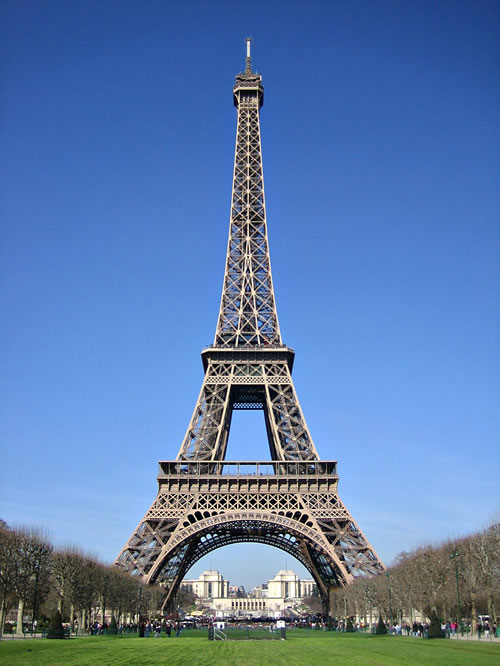


And my number one perfect reading day memory is...

1. Eiffel Tower
When I was living in Germany, my sister came over to visit, and we decided to take a day trip to Paris. We went to Belgium the night before to visit a friend of mine, and then we took a train to Paris in the morning. I love traveling with my sister because she is exactly like me when it comes to seeing a new place: There are certain things we wanted to see, but more than anything else, we just wanted to be able to soak up the atmosphere of the city. 


We spent the majority of our day in Paris sitting on a park bench right by the Eiffel Tower and reading. The day was a gorgeous spring day, and the sounds of the people enjoying the park—laughter, dogs barking, conversations in so many different languages I lost count—filled my spirit and enhanced the words that were seeping from the pages and into my mind. Every once in a while I’d stop reading and look up just to make sure I was still really there by the Eiffel Tower. Thinking back on that day, that atmosphere, reminds me of just how blessed I’ve been. Perfect day, perfect atmosphere, perfect company, perfect reading. That memory is, in a phrase, 'joie de lire.'

My nostalgia for my perfect reading days is making me look forward to the possibility of having another perfect reading day just around the corner. Could it be today? Or tomorrow? That’s the great thing about perfect reading days—they sneak up on you and present themselves in the randomest of ways. Any day could be a perfect reading day.

Have you had a perfect reading day lately? What’s the best reading day you can remember?

Happy 'joie de lire'!

Tuesday, March 30, 2010

ARCADIA FALLS: Secret Love Child?

I feel like I can shout, “I’m back, reading world!” I have spent the past few days hunkered down with all the books that are coming in (I treated myself to a little shopping spree on Amazon, and I re-read a couple of my old favorites while I was waiting for the new books). I feel refreshed, and my addiction to reading has started anew. I kicked off my new reading list by reading Carol Goodman’s Arcadia Falls.


My overall opinion is that Arcadia Falls is another wonderful Goodman book that I will treasure and look forward to re-reading. And yet… it is another Goodman book. There are qualities I abosutely adore about Goodman’s style of writing--her ability to fuse academia with fairy tales and/or mythology and/or folklore with a current storyline is not only refreshing but also intellectually invigorating. I adore her work, and by extension, I adore her. However, about a fourth of the way into her new book, I felt like I was re-experiencing The Lake of Dead Languages but with a fairy tale twist (instead of a mythology twist), which then led me to this conclusion: If books could reproduce, Arcadia Falls would be the secret love child of The Lake of Dead Languages and The Seduction of Water.


Of the two, The Lake of Dead Languages was definitely the dominant gene, but The Seduction of Water left its trace on their love child with a fairy tale surreptitiously based on a secret life of one of the characters playing an integral role in the story overall.

The similarities between The Lake of Dead Languages and Arcadia Falls extend from the settings to the characters to the plots themselves.


  • Setting: both books are set primarily in a boarding school in upstate New York, and in both books, the story's climax takes place in the dead of winter (with the primary character having to drive in a snowstorm to get back to the school to stop the madness going on there).


  • Characters: both books feature a single mother (in one, a divorced mother with a young daughter; in the other, a widowed mother with a not-as-young daughter) who, at the beginning of the book, begins teaching at said school in upstate New York and who, at the end of the book, discovers something new about herself.


  • Plot: both books have the plot thicken with the untimely death of a student (there are even similarities in two of the death scenes); both books have a twist in the plot that then shows the characters have been operating under false assumptions; both books have a hidden journal that plays an integral role in the plot development.


Going through the similarities (I could go further, but I don’t want to be too much of a spoil sport for anyone who wants to read either or both books) makes me wonder if some of the similarities are borne out of Goodman’s own life or her fascination with particular themes and possible twists in stories.

Her books have an undercurrent theme of "people aren’t who they seem to be." This theme is often hand-in-hand with another theme in her books: "people who don't know their own pasts can be hurt by that lack of knowledge in the present/future." The ones to blame for those characters not knowing their own pasts are often the characters' parents. Perhaps the moral to her stories is for parents to be honest with their children about their pasts. I am so intrigued I'm considering doing more research on Carol Goodman to find out if this is something that is a moral for her own life story.

In Arcadia Falls, she focuses on a specific fairy tale called The Changeling Girl, which was oddly reminiscent of the fairy tale written for The Seduction of Water (The Selkie’s Daughter). In both books, the fairy tale provided the backdrop for the main story line so that in a way the fairy tale mirrored something going on in the plot and, in fact, provided some of the underlying reasons for why characters in the book weren't who they seemed to be.

While pointing out all the similarities, the books have enough differences that even if you’ve read one book, I’d still suggest reading the other books. Although I felt, at times, that I was re-experiencing The Lake of Dead Languages, I also felt that Goodman had pulled out the best parts of The Lake of Dead Languages and of The Seduction of Water to write a book that demonstrates her growth as a writer. It’s like reading a reinvention of a familiar story; in fact, the fairy tale in Arcadia FallsThe Changeling Girl, was itself a reinvention--the fairy tale began as one story and, over time, morphed into a new story based on the storyteller’s life changes. I like to think that by reading all three books, I’ve managed to witness a reinvention of a story Carol Goodman considers personal (whether that “personal” aspect is autobiographical in any way is--as of right now--unknown to me).

If you've read these books, what do you think? Do you agree with my assessment?

Happy reading!


Tuesday, March 2, 2010

Reading Slump of '10

I've hit a slump.  A reading slump, that is.  I haven't cracked open a fun book to enjoy in well over two weeks, and my non-reading state leaves me feeling a bit ... slumpy.  I want to read, I want to get my 'joie de lire' on, but I just haven't.  Why is that?  Why is it that someone, like me, who enjoys reading so much doesn't do it all the time?


Above is a picture of an actual slump (taken from the Giant's Causeway website).  Notice ridges in the hillside that show the ground is collapsing beneath itself and causing somewhat of a landslide.  Thus, the metaphorical slump of a downward spiral where things collapse and pull the slumped person down.  *Sigh*

As I'm writing this, I'm sitting in my big, comfy chair with my laptop perched on my lap.  I'm wistfully staring at the small bookcase beside my chair, which holds the three books I'm currently reading and my Kindle (which stores the other two books I'm reading).  Just writing that sentence makes me wonder if part of my problem is that I started too many books at once and now feel overwhelmed with the thought of getting through them all.  But, no, that can't be it because I've read had times in the past where I've had more than five books cracked open during the same time frame.

I want to read, so why don't I?  I know I can provide a short-term answer.  At this very moment, I can't let myself get caught up into a book because I'm taking a short break from grading and getting prepped for courses and meetings that will take place later on today.  In fact, I blame my schedule for my not picking up a book to read--plainly put, every time I sit down and have the mental capacity to read, I am reading something that's not for personal enjoyment.  Instead, I am reading something I have to read.  Maybe it's the fact that I have a job that requires me to read that pulls me away from my personal reading time.

I want to blame all sorts of external things for my lack of reading, yet I know it all boils down to me: I go through periods in my life where I will be super-dedicated to something and then periods where I can't get myself to do that very thing I had been so wrapped up in for weeks/months.  I'll read book after book for a few weeks and then not pick up a book for a while.  I'll do crosswords every day for a few weeks and then not even want to look at a crossword for a month.  I don't like that all-or-nothing feeling and wish I could have a bit of moderation in my life while still being productive, but that just doesn't seem to be me.

Normally, I wouldn't be so concerned about my reading slump.  But now that I've started a reading blog, I feel like I'm letting somebody out there down when I miss a posting or don't have anything inspired to say about books because I'm not currently wrapped up in one or two or three.  Then again, I can't be so pompous to assume that my readers have their lives on hold because I haven't posted.  Still ... I feel a sense of duty to be regular in my posting because I hope there are readers on the other end wanting to find a new post on my blog.

I've missed two postings in the past five days, and I'm going to be honest--I will also miss tomorrow's post.  I'm working on something for Friday, so if all goes well, I'll be back on track.  I'm also scheduling in 30 minutes of reading for tonight.  I don't feel like reading for fun should have to be scheduled, but I'm worried that if I don't push myself to get back into the reading habit, it may be another couple weeks before I get back into reading.

Are any of you out there like me?  Do you have reading slumps, too?  If so, how do you get over them?

Friday, February 19, 2010

My Fave Five: Spotlight on Authors

When it comes to my favorite authors, I am all about the girl power.  My favorite authors are all female: Daphne duMaurier, Carol Goodman, Sarah Addison Allen, Jennifer Donnelly, Marian Keyes.  Being a book lover has turned me into an author “groupie” of sorts: I regularly do searches on my favorite authors to see if they have anything new coming out or if they have an online presence I can be a part of.  When my friend request on Facebook was accepted by Sarah Addison Allen, I did a little dance. . .  Today I wanted to take a step back and shine a spotlight on my "Fave Five."


Screenshot from the Daphne duMaurier webpage, run by dedicated fans of her work


While Daphne duMaurier is in my Fave Five list (in fact, she tops my Fave Five list), my searches on her are not as frequent, as she is no longer with us to be writing new books or starting a new blog.  (Although, there is an annual duMaurier Festival I might need to start joining in on.)  I love her books because they are timeless, and I owe being able to include her in my list of favorite authors to my sister.  If my sister had not convinced me to read Rebecca, I never would have experienced duMaurier's ability to write mysterious and suspenseful storylines with beautifully marred characters.  Her books take me to a special place as a reader, and just holding a copy of Rebecca in my hands puts a smile on my face.

March is going to be an exciting month for me, with two new releases from the next ladies of my Fave Five: Carol Goodman’s Arcadia Falls and Sarah Addison Allen’s The Girl Who Chased the Moon.  (In fact, I just added a countdown widget to the right-hand sidebar for Allen's new book.)


Screenshot from Carol Goodman's website


Carol Goodman is an intriguing author for me because she weaves her interests (and education) in classical studies with modern-day plots.  When I read a Carol Goodman book, I find myself enjoying a story while learning something academic-y--that’s a combination I adore.  The first book I ever read of hers was Lake of Dead Languages, and as soon as I finished that book, I immediately called all my friends who enjoy reading and told them that they had to check it out.  I enjoyed that book so much, that when I stopped reading it in the late evening hours to sleep, I dreamt about the book.  I find myself wishing I could put me into her storylines, so her books stay with me long after I put them down.


Screenshot from Sarah Addison Allen's website


Sarah Addison Allen’s books are endearing to me because they weave together magical elements with reality so that you believe it’s possible to create potion-like results from cooking with flowers.  Her book Garden Spells was given to me as a gift, and it sat on my shelf for nearly a year before I picked it up.  I took it with me when I flew to Nashville to meet two of my friends for a girls' weekend, and on the way back, I finally cracked open the book.  I fell in love from the first chapter and was taken to a new world with her writing.  Yet again, as soon as I finished that book, I contacted all my reading friends and told them to immediately go out and get the book.  On her website, she states:

Garden Spells, my mainstream debut, didn’t start out as a magical novel. It was supposed to be a simple story about two sisters reconnecting after many years. But then the apple tree started throwing apples and the story took on a life of its own...and my life hasn’t been the same since.

How could you not love an author who says something like that?  Allen's online presence is another thing that compels me to include her in my Fave Five.  When you can friend a favorite author on Facebook, you feel a special connection forevermore.


Screenshot of Jennifer Donnelly's website


I enjoy reading interviews with Jennifer Donnelly because she is so down-to-earth.  She is open about her struggles to balance work and home life--as a mother and author, she’s got obligations galore that I can relate to--on her notes she writes to readers (on her website), and yet she’s a multi-genre author who excels in writing children’s books, young adult fiction, and historical fiction.  Her ability to twine together research about historical periods with fascinating storylines amazes me.  The first book I read by her was Northern Lights, which is one of her young adult books.  When I finished that book, I was so intrigued by her writing that I bought Tea Rose, which is the first book of a historical fiction trilogy.  Part of my love for her books could be attributed to my love of history, but the majority of my love for her books is solely attributed to Donnelly's strong writing.


Screenshot from Marian Keyes's website


I was introduced to Marian Keyes by my friend Kirsty about five years ago.  The first book I borrowed from Kirsty was Sushi for Beginners.  As soon as I finished it, I bought a copy for myself and then borrowed three more books by Keyes.  I am slowly collecting all her books (though I’ve read all but one through borrowing from friends), and I am ecstatic about her newest release, The Brightest Star in the Sky.  One aspect I appreciate about Marian Keyes’s books is that she has brutally honest characters.  They have flaws, and Keyes exploits those flaws perfectly so that I, as a reader, do not judge the characters but root for them to get over the hurdles they are facing.  I love her books so much that I am trying to convince my sister (a fellow Keyes fan) to go on a “Keyes tour” with me, which would include stops in the locations featured in her books (including Dublin and London).

Just looking at the screenshots from the authors' websites can give you an idea of the diversity represented by my Fave Five:  I like a variety of styles, and these ladies produce quality work that boosts my 'joie de lire.'  Who is in your Fave Five?

Happy reading!